

Mental Health and Mental Illness
Author

Media Contact
For general and media inquiries and to book our experts, please contact: pr@rstreet.org
MENTAL
WELL-BEING
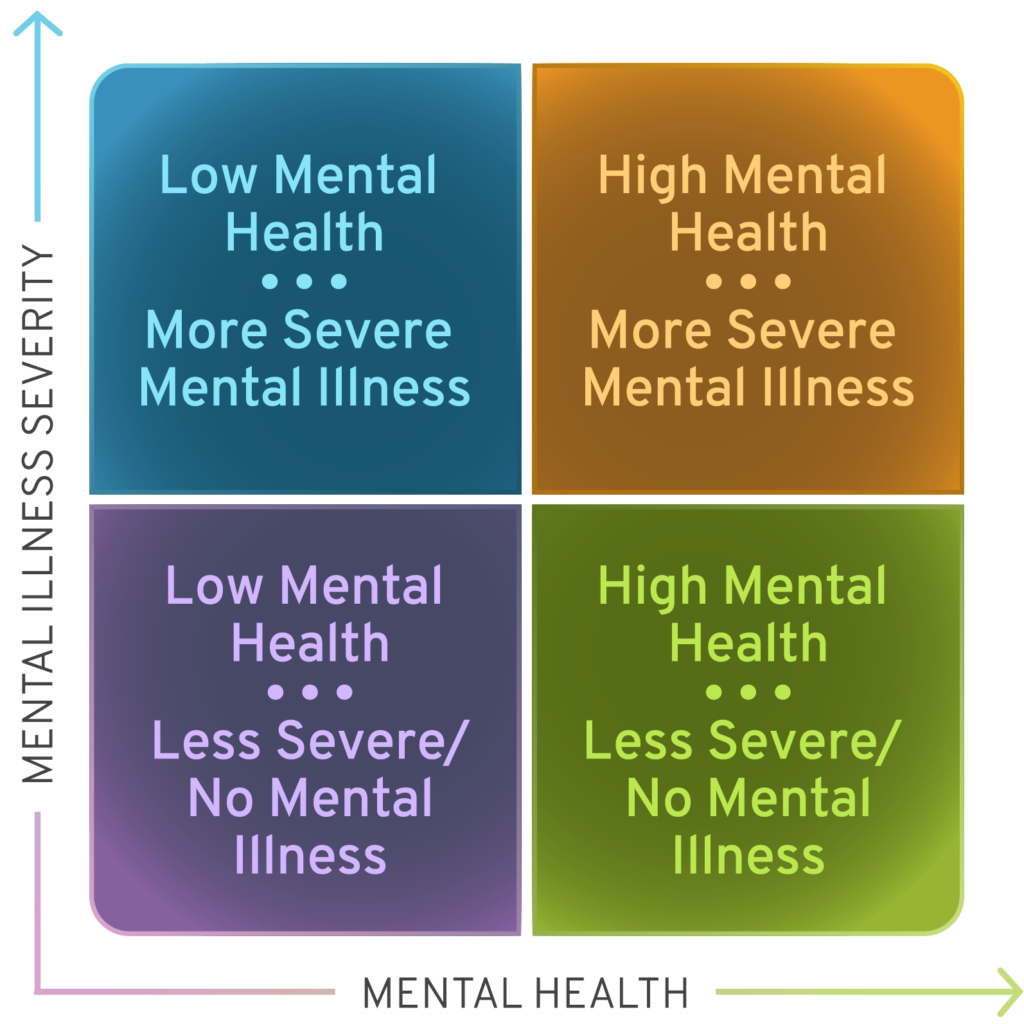
Differentiating between “mental health” and “mental illness” has important policy implications. For example, regardless of their overall mental health, a person with an untreated mental illness needs different support than a lonely or severely stressed person without a mental illness. If the goal is to address mental illness in the community, then policymakers could focus on implementing policies that expand treatment access; but if the goal is to improve public mental health more generally, then a focus on policies that help people live comfortable, meaningful, and healthy lives would be more appropriate.
Mental Health vs. Mental Illness
Most accepted definitions describe “mental health” as the entirety of our emotional, psychological, and social well-being. It includes our abilities to manage life’s stresses, to work and learn well, and to engage with our communities, and it may change throughout our lifespan. Some definitions also include the absence of disabling symptoms. Mental health can also be described as our internal state of wellness and how it affects the way we interact with and experience the external world. Being in good mental health does not mean never experiencing negative or unpleasant emotions or thoughts. These feelings are part of living a full existence, and good mental health improves a person’s ability to cope with them.
“Mental illness” is characterized by changes in emotion, thinking, and/or behavior that can cause distress, difficulty engaging in daily activities, or both. They can be temporary, relapsing and remitting, or persistent. They are also often treatable. The terms “mental health condition” or “mental disorder” are often used interchangeably with mental illness; but according to the World Health Organization, in addition to “mental disorders,” “mental health conditions” might also include “psychosocial disabilities and (other) mental states associated with significant distress, impairment in functioning, or risk of self-harm.” Context will often dictate how broadly the term “mental health conditions” is being used.
Mental illnesses are sometimes broken into two categories: any mental illness and serious mental illness. The “any mental illness” category includes all mental illnesses independent of their impact on functioning, including serious mental illnesses. What differentiates serious mental illness from any mental illness is that it involves “serious functional impairment, which substantially interferes with or limits one or more major life activities.” Many mental illnesses meet this definition, including bipolar disorder, major depressive disorder, schizophrenia, and more.
Mental health is inherently subjective, as it describes a person’s inner wellness and experience. Although a person’s experience of mental illness may affect their mental health, mental illness is not always associated with poor mental health. Research has documented that some people who meet the definition for clinical depression report flourishing mental health. Culture can also affect how people perceive and experience mental illness and how it affects their mental health. For example, while Western society typically interprets auditory hallucinations (“hearing voices”) as a sign of psychosis, some cultures interpret and experience auditory hallucinations as either neutral or positive. Even the ways in which mental illness is treated can affect mental health differently: Controlling symptoms might improve mental health for some, while others might experience side effects that harm mental health by minimizing the positive impact of a given treatment.
Challenges to Diagnosing Mental Illness
The process of identifying mental illness is less objective than that used to identify many physical illnesses, as no definitive laboratory or medical imaging tools exist to aid in diagnosis. Instead, mental health professionals must use certain diagnostic criteria to evaluate patients based on their behaviors and reported experiences.
This means that while one clinician might conclude that a patient’s symptoms are significant enough to constitute a diagnosis of mental illness, another might assess them as not clinically significant. (This can also happen with physical illnesses.) Still, other factors—including overlapping symptoms and multiple diagnoses—can complicate the diagnostic process for mental illness.
Social factors can also complicate diagnosis. Stigma around mental illness can affect people’s willingness to seek care, and cultural differences can affect how people describe their symptoms as well as what might be considered a “normal” or “healthy” behavior, experience, or response to circumstances. This can create communication and diagnostic challenges between clinicians and patients with different cultural backgrounds.
Policy Context
While many policy options exist to improve health outcomes for people with mental illness and to improve public mental health in general, understanding the relationship between mental health and mental illness is critical to implementing the right policies. Mental illness is just one aspect of mental health and well-being, and the healthiest communities recognize the need to address both.