

Why Treating OUD with Medication Is Not Just Replacing One Addiction with Another
Author

Media Contact
For general and media inquiries and to book our experts, please contact: pr@rstreet.org
In the United States, untreated opioid use disorder (OUD) contributes to tens of thousands of deaths and costs almost $1 trillion annually. Methadone and buprenorphine are gold-standard medications that have been used to treat OUD for decades. They save lives, improve recovery outcomes, and benefit communities as a whole.
The catch? Because these drugs are opioids themselves, some people worry that taking them is just replacing one addiction with another. But methadone and buprenorphine work very differently from illicit opioids. The following table compares the two medications for opioid use disorder (MOUD) to fentanyl, the potent opioid responsible for the overdose crisis that has decimated American communities for the past 13 years.
| Treatment Properties | Methadone | Buprenorphine | Illicit Fentanyl |
|---|---|---|---|
| Attaches to opioid receptors in the brain? | MethadoneYes | BuprenorphineYes | Illicit FentanylYes |
| Activates those opioid receptors? | MethadoneYes | BuprenorphinePartially (about 50-70 percent) | Illicit FentanylYes |
| Causes respiratory depression at high doses? | MethadoneYes | BuprenorphineLimited (ceiling effect) | Illicit FentanylYes |
| Produces physical dependence? | MethadoneYes | BuprenorphineYes | Illicit FentanylYes |
| Speed of effect onset? | Methadone30 minutes to 2 hours (oral) | Buprenorphine30 to 60 minutes (oral) | Illicit Fentanyl30 seconds (intravenous) to 7 minutes (intranasal) |
| Causes euphoria? | MethadoneNot when taken as prescribed (slow onset) | BuprenorphineNot when taken as prescribed; limited at high doses (ceiling effect, slow onset) | Illicit FentanylYes |
| Time to withdrawal symptoms? | Methadone24+ hours (therapeutic dose) | Buprenorphine24+ hours (therapeutic dose) | Illicit Fentanyl6 to 12 hours |
| Typical dosing/use frequency? | MethadoneOnce per day | BuprenorphineOnce per day (oral); once per week or month (extended release injectable) | Illicit Fentanyl3 to 10 or more times per day |
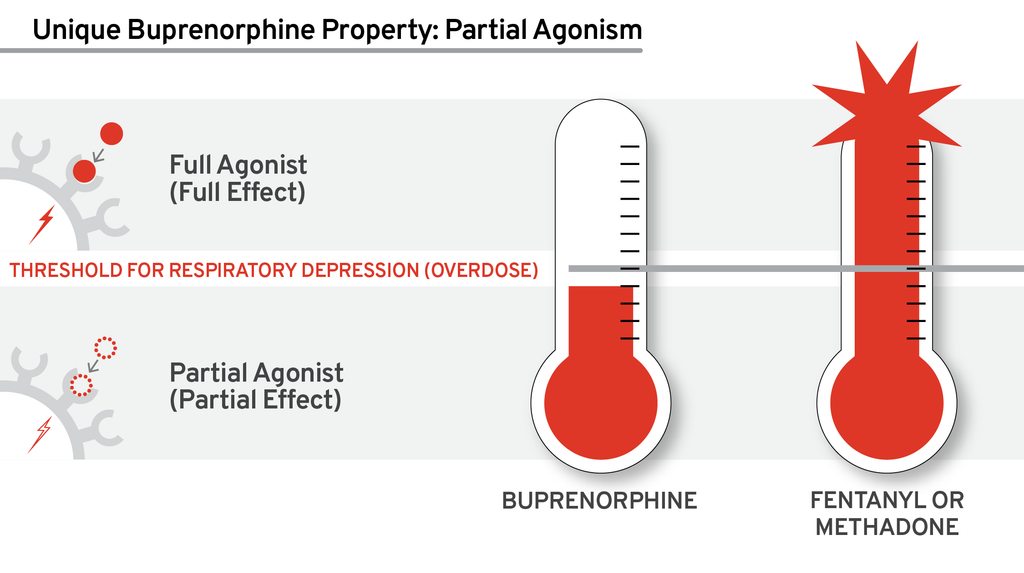
Buprenorphine has a “ceiling effect”
Because buprenorphine only activates the brain’s opioid receptors by about 50 to 70 percent, its effects plateau even at high doses. This reduces its ability to produce either the “rush” or the severe respiratory depression typically associated with opioids.
MOUD produce stability, not a “high”
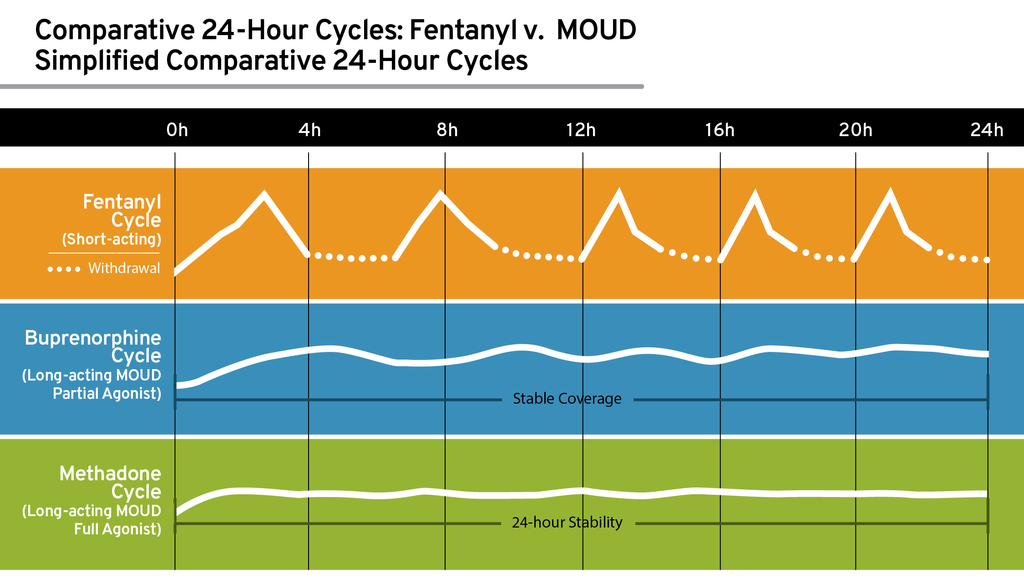
Because fentanyl’s effects come on rapidly and fade quickly, the drug causes euphoria followed by a crash that includes often-debilitating withdrawals. Buprenorphine and methadone take effect slowly, relieving cravings without producing a “high” or other impairment. And because MOUD last much longer than fentanyl, patients only need to take them once per day (or less often, in the case of extended release injectable formulations) to avoid withdrawal symptoms. This reduces risk for overdose, infectious disease transmission, and incarceration and gives individuals the stability needed to engage in recovery and everyday activities like work and caring for family.
Dependence is not addiction
Opioids, including MOUD, commonly produce physical dependence—a normal process in which the body has adapted to a substance (e.g., opioids, caffeine, antidepressants) to such a degree that stopping abruptly leads to withdrawals. Typical symptoms of opioid withdrawal include nausea, diarrhea, sweating/clamminess, mood swings, and fever. Withdrawals are extremely uncomfortable, and symptoms can be dangerous for vulnerable individuals if left untreated. However, dependence is not the same as OUD, which is defined by compulsive behaviors that continue despite repeated and often extreme negative consequences. People taking MOUD remain physically dependent on opioids, but because the medications stabilize brain chemistry, individuals are able to develop coping skills, rebuild relationships, and engage in ways that allow them to reclaim control over their behavior and their lives.
Long-term use improves outcomes
The benefits of MOUD increase the longer people take them, but medication is not a “one-size-fits-all” treatment. Clinical guidelines discourage abrupt discontinuation and emphasize tailoring medication duration to patient needs and wants. Consequently, some people take MOUD for months or years while others take them indefinitely.
Takeaways for lawmakers
While MOUD are the most effective treatment option for people struggling with OUD, they remain overregulated and underused. Improving access to these medications is not facilitating continued addiction; rather, it is giving people a tool to stay safe, stabilize their brain chemistry, and re-engage with their lives and communities.